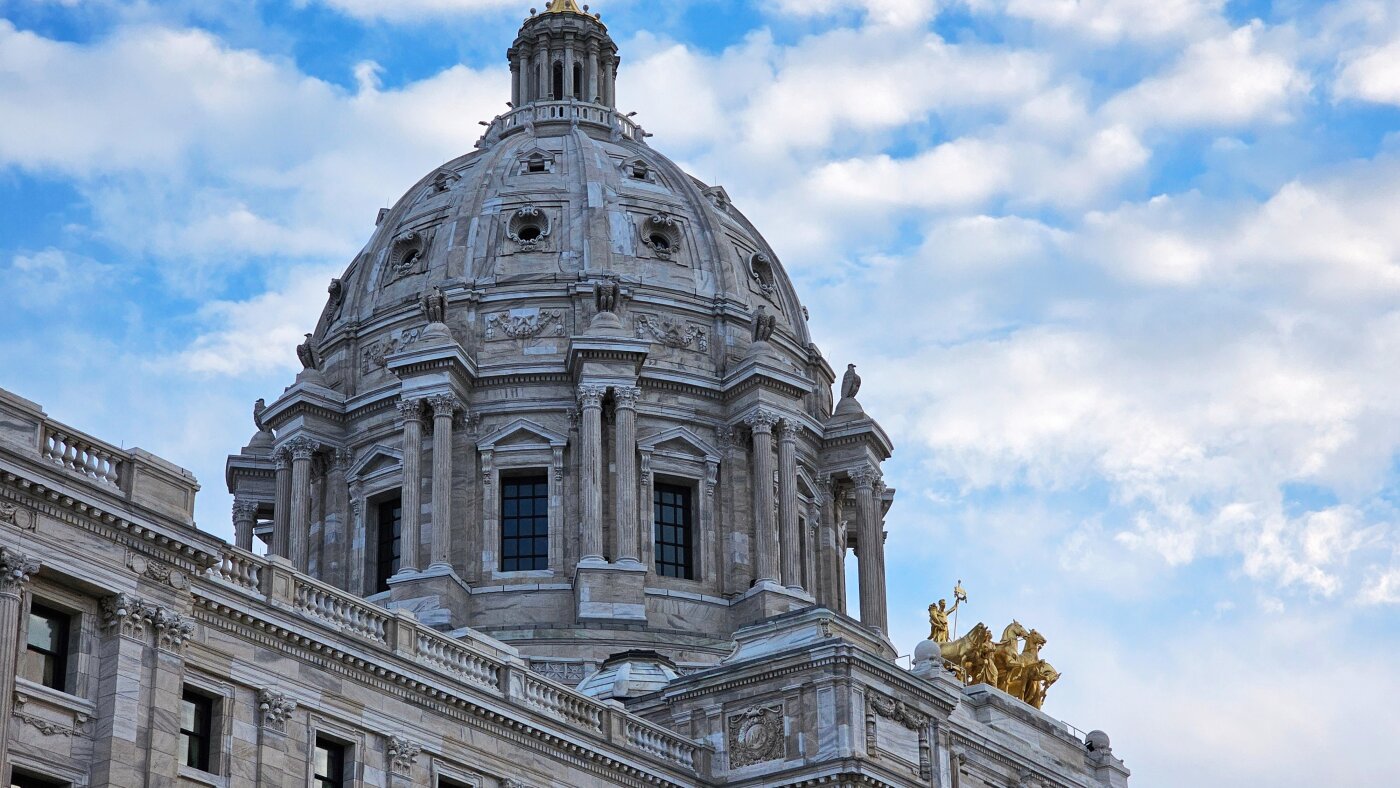
【Market Analysis】 Analyst estimate trends matter far more than any single forecast. Minnesota has become the first U.S. state to pass a law that explicitly bans prediction markets, making it a felony for platforms like Kalshi and Polymarket to operate within its borders. The move represents a significant escalation in state-level scrutiny of the controversial industry, where dozens of other states have previously taken legal action.
Live News
【Market Analysis】 Investors often experiment with different analytical methods before finding the approach that suits them best. What works for one trader may not work for another, highlighting the importance of personalization in strategy design. According to a report from NPR, Minnesota's new legislation criminalizes the operation of prediction market platforms, classifying violations as a felony. While numerous states have previously pursued legal measures against the industry—ranging from cease-and-desist orders to civil penalties—Minnesota is the first to enact a statutory ban with felony-level consequences. Prediction markets allow users to bet on the outcomes of future events, such as elections, sporting events, or economic indicators. Platforms like Kalshi and Polymarket have grown in popularity but have also attracted regulatory scrutiny over concerns about gambling, market manipulation, and election integrity. Critics argue that these platforms resemble unregulated gambling operations, while proponents claim they provide valuable forecasting data. The Minnesota law specifically targets companies that operate prediction market platforms within the state. The legislation does not differentiate between event-based contracts or other types of prediction products. The move may set a precedent for other states considering similar crackdowns. However, the full scope of enforcement and potential legal challenges remain unclear. Industry observers note that the federal regulatory landscape for prediction markets is still evolving. The Commodity Futures Trading Commission (CFTC) has previously scrutinized such platforms but has not issued a comprehensive ban. Minnesota’s decision could influence future federal and state policy discussions.
Minnesota Enacts Landmark Ban on Prediction Markets, Making Operation a FelonyVolume analysis adds a critical dimension to technical evaluations. Increased volume during price movements typically validates trends, whereas low volume may indicate temporary anomalies. Expert traders incorporate volume data into predictive models to enhance decision reliability.Some traders prefer automated insights, while others rely on manual analysis. Both approaches have their advantages.The availability of real-time information has increased competition among market participants. Faster access to data can provide a temporary advantage.Investors often rely on a combination of real-time data and historical context to form a balanced view of the market. By comparing current movements with past behavior, they can better understand whether a trend is sustainable or temporary.Diversification in analysis methods can reduce the risk of error. Using multiple perspectives improves reliability.Data platforms often provide customizable features. This allows users to tailor their experience to their needs.
Key Highlights
【Market Analysis】 Data-driven decision-making does not replace judgment. Experienced traders interpret numbers in context to reduce errors. - First-of-its-kind felony ban: Minnesota is the only state to date to classify operation of prediction markets as a felony, signaling a more aggressive regulatory stance. - Precedent for other states: Dozens of states have taken legal action against prediction markets, but Minnesota’s law may encourage other jurisdictions to adopt similar felony-level restrictions. - Impact on major platforms: Companies like Kalshi and Polymarket may face restricted access to Minnesota customers and possible legal exposure if they continue operations within the state. - Sector uncertainty: The ban introduces additional regulatory risk for the prediction market industry, which has already faced uncertainty at both state and federal levels. - Potential constitutional challenges: Legal experts suggest that the law could be challenged on First Amendment or interstate commerce grounds, though such challenges would likely take months or years to resolve. - Market implications for related sectors: Companies providing technology, payment processing, or data services to prediction market platforms could face indirect regulatory pressure if other states follow Minnesota’s lead.
Minnesota Enacts Landmark Ban on Prediction Markets, Making Operation a FelonyMany traders monitor multiple asset classes simultaneously, including equities, commodities, and currencies. This broader perspective helps them identify correlations that may influence price action across different markets.Structured analytical approaches improve consistency. By combining historical trends, real-time updates, and predictive models, investors gain a comprehensive perspective.Traders frequently use data as a confirmation tool rather than a primary signal. By validating ideas with multiple sources, they reduce the risk of acting on incomplete information.Access to multiple perspectives can help refine investment strategies. Traders who consult different data sources often avoid relying on a single signal, reducing the risk of following false trends.Correlating global indices helps investors anticipate contagion effects. Movements in major markets, such as US equities or Asian indices, can have a domino effect, influencing local markets and creating early signals for international investment strategies.Predictive tools are increasingly used for timing trades. While they cannot guarantee outcomes, they provide structured guidance.
Expert Insights
【Market Analysis】 Access to futures, forex, and commodity data broadens perspective. Traders gain insight into potential influences on equities. From a professional perspective, Minnesota’s move represents a notable shift in the regulatory environment for prediction markets. While federal oversight has been limited, state-level bans may create a patchwork of regulations that complicates compliance for platforms operating nationally. Investors in companies associated with prediction markets—such as technology providers or financial intermediaries—may face heightened uncertainty regarding future revenue and legal costs. The law could also have broader implications for the broader financial technology and online gambling sectors. As states increasingly target these platforms, the cost of compliance and potential litigation may rise. However, it is too early to assess whether other states will follow Minnesota’s felony-level approach or opt for less severe regulatory measures. For now, market participants should monitor legal developments in Minnesota and potential responses from federal regulators. The outcome of any legal challenges could shape the future of prediction markets in the United States. As always, investors are advised to exercise caution and conduct independent research before making decisions related to emerging regulatory environments. Disclaimer: This analysis is for informational purposes only and does not constitute investment advice.
Minnesota Enacts Landmark Ban on Prediction Markets, Making Operation a FelonyCross-asset correlation analysis often reveals hidden dependencies between markets. For example, fluctuations in oil prices can have a direct impact on energy equities, while currency shifts influence multinational corporate earnings. Professionals leverage these relationships to enhance portfolio resilience and exploit arbitrage opportunities.Access to global market information improves situational awareness. Traders can anticipate the effects of macroeconomic events.Monitoring the spread between related markets can reveal potential arbitrage opportunities. For instance, discrepancies between futures contracts and underlying indices often signal temporary mispricing, which can be leveraged with proper risk management and execution discipline.Many traders use scenario planning based on historical volatility. This allows them to estimate potential drawdowns or gains under different conditions.Trading strategies should be dynamic, adapting to evolving market conditions. What works in one market environment may fail in another, so continuous monitoring and adjustment are necessary for sustained success.Combining technical analysis with market data provides a multi-dimensional view. Some traders use trend lines, moving averages, and volume alongside commodity and currency indicators to validate potential trade setups.